
Elbow Lameness In Sport Horses: Do Horse Have ELBOWS?
Hello, everyone!
When was the last time you heard your veterinarian say, “I think your horse is lame because of its elbow”?
I have brought this topic up in podcasts, and every veterinarian that has ever worked with me knows that I diagnose and treat more elbows than probably any veterinarian in the world. I am making a nonfactual and unauthenticated assumption with this last statement; however, no one in the veterinary sports medicine world is talking about lameness coming from the elbow unless there is a fracture or known injury to the elbow. Where is the elbow? Between the shoulder and knee of the horse. It is part of the “stay apparatus” that helps a horse sleep standing up. 
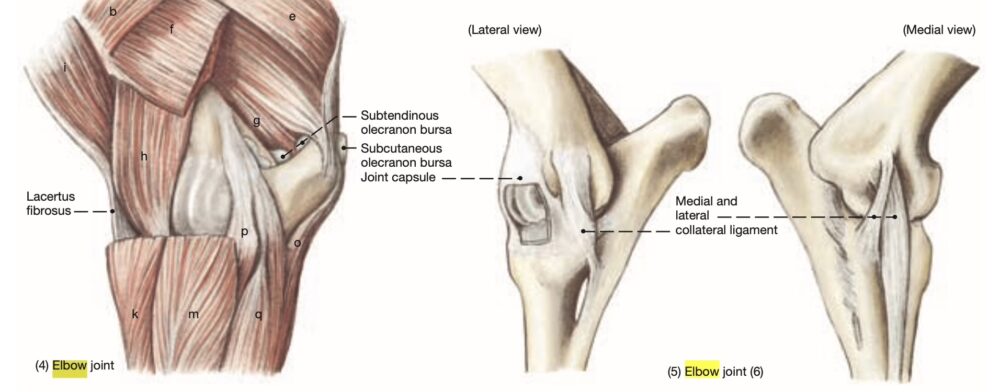
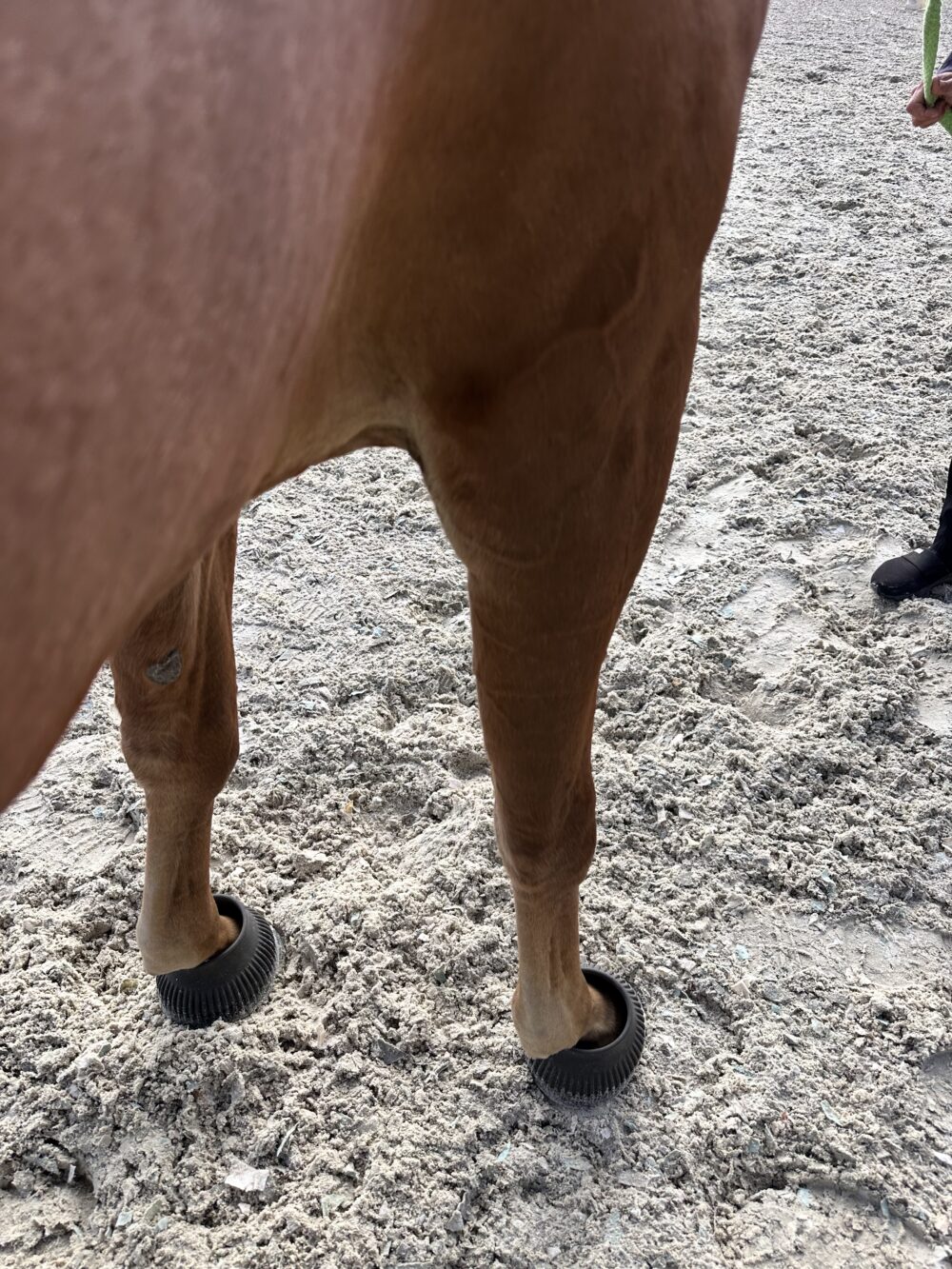
In January 2022, a peer-reviewed paper was published in Veterinary Radiology and Ultrasound (here is the link to the paper) using CT as a diagnostic method to determine lesions. Well, I do not know how many of you want to pay for CT images of your horse’s elbow(s) to diagnose or to determine if this is the cause of lameness, but that is up to each individual on how they spend their money. CT is a useful and expensive tool that has to pay for itself, hopefully just like a horse, but we all know it is laughably illogical! My cheap diagnostic tools are my hands and eyes. Radiographs and ultrasound are also good diagnostic tools, but it is hard to get good images at times. This is a picture I took today of a horse’s stance with moderate-severe elbow pain.
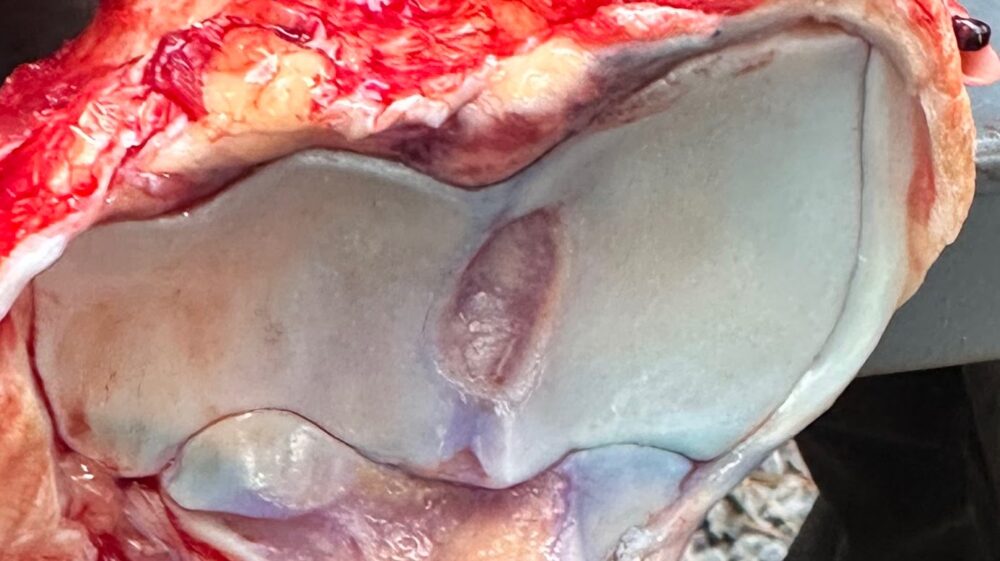
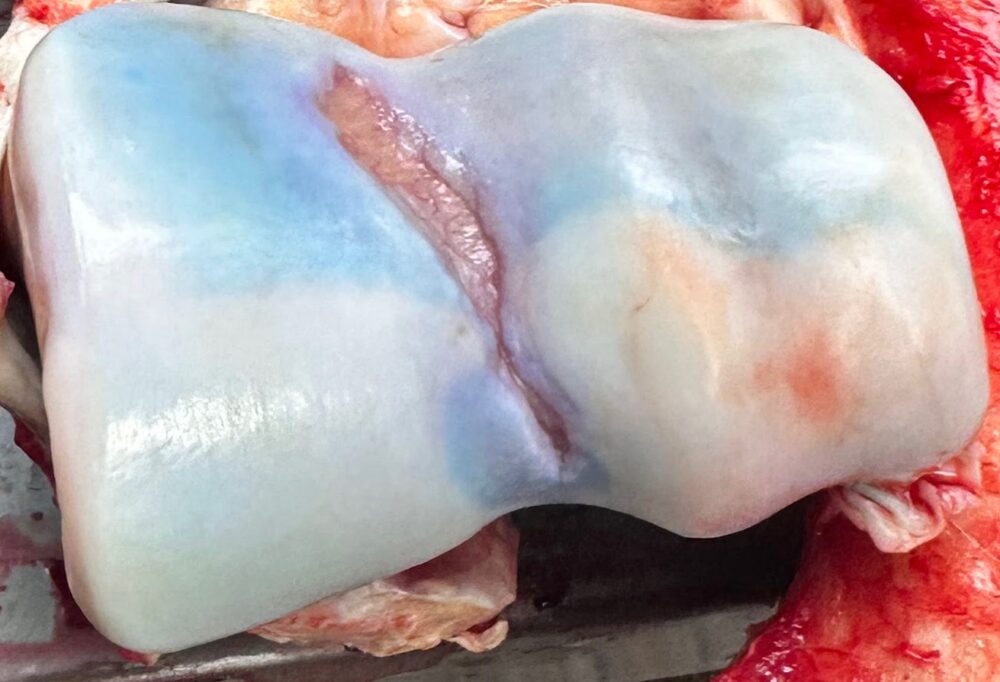
In all of the necropsies that I have done, except for 2 horses that were less than a year old, every single horse had elbow lesions IF I looked. Here are images of severe joint pathology of the elbow in a necropsy we did in November on a 7-year-old jumper.
Here is a lameness case that I saw about a month ago where I actually blocked its foot, then the fetlock down, then the proximal suspensory down, and guess what happened? The horse was still lame post-blocking; see the video below, as it is very obviously still head-bobbing lame in both directions. Guess what the cause was? Elbow! And for all of you that do not know me as a veterinarian, I think the last time I blocked a horse was 3 or 4 years ago. I RARELY block! The true fact is, I do not need to block to figure out why they are lame. Hmmmm…isn’t that an interesting concept to challenge the norm? Every time that I do block a horse, I text a bunch of colleagues to tell them that “I feel like I am a ‘REAL sports medicine veterinarian’ today blocking horses.” The second video is me injecting the elbow, and the large amount of fluid squirted across the wash stall before I could grab my phone and videotape, then re-glove. I did not realize until editing the video that the music in the background was playing “Why Does It Feel So Good?” I left the audio on and take no credit for the timing and words of the song, but the horse went from lame to sound post-injection.
Why are elbows so important? They take the ENTIRE vertical loading force of the front limb and/or body during the stance phase of the stride. EVERY SINGLE STRIDE! Walking, trotting, cantering, landing, turning, sliding, stopping, etc. IF veterinarians understood and were taught the biomechanics of how a horse works, then maybe the profession would look at elbows more, and I would not have to write a blog or talk about them, period. The problem is at no fault to veterinarians, though they are taught in lameness courses that few horses have elbow problems or injuries. Thus, I still believe that people are doing the best they can with what they have or know. Here are some images and a video of a draft horse show hitch to demonstrate the concussive and shear vertical forces that the elbow withstands.
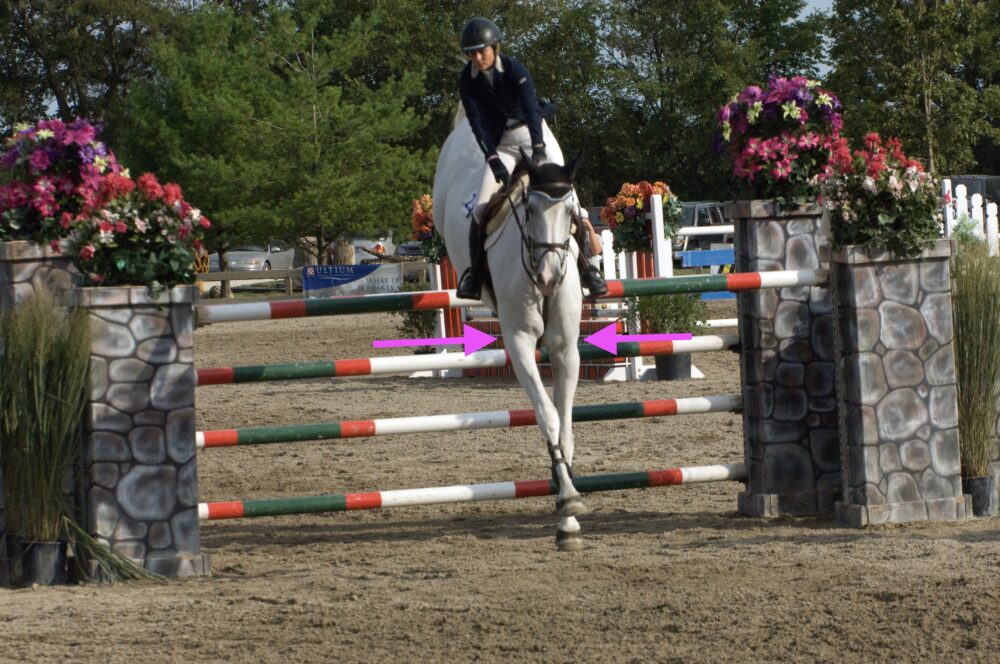
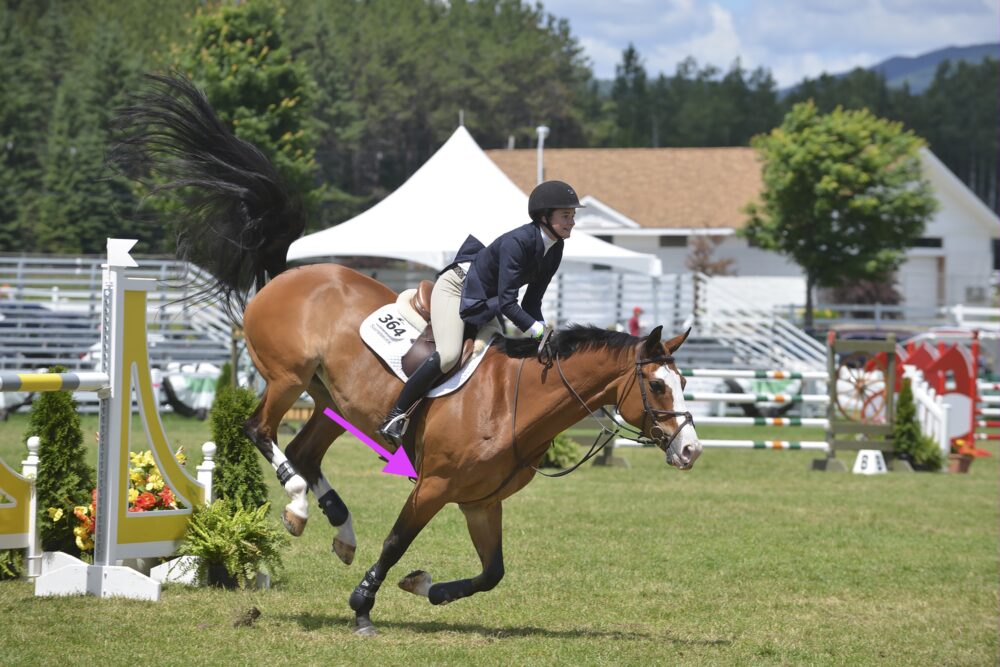
A short and sweet blog to open your eyes and mind to other underdiagnosed and treated causes of lameness that I see and treat every single day in practice.
Please share this blog and my podcast with your horse friends, and comment below if this was helpful. Most importantly, remember to always put The Horse First.
AJD
Be the first to comment