
What is Normal about Asymmetrical Feet in Horses?
Hello Everyone!
I am not a farrier. I will also never (yes I used that word) tell a farrier how to do his/her job. Why? Simple fact that I can take a shoe off of a horse, but I sure in the heck cannot put it back on correctly! I do not have the training, tools, or learned skills of the trade to do the job. Until I choose to spend day after day after day pulling, trimming, rasping, forging and nailing shoes on a horse, I will to stay in my lane being a veterinarian. It is like someone reading a book on how to climb a 100 foot pole versus actually climbing that 100 foot pole as a journeyman lineman. Looks easy until you do it.
Understanding the concepts of how horses feet grow the way they do is pretty simple. The most important point of this entire blog about feet is that it is ONE YEARS WORTH OF HISTORY in each foot! Let me say that again….ONE YEAR OF HISTORY! A horses foot is the most reliable factual history that you can literally observe to tell you what has happened in the past year of any horses life. Sickness, feed/nutritional change, stress, but most importantly LAMENESS and how the horse has been landing, moving, and bearing weight for ONE YEAR! The history is found by not only looking at the foot from the front, sides and behind but also the bottom of the foot.
I am going to make this super-duper simple. It is the only way my brain can work to understand what many make so complicated about horses feet and farrier work. I had to learn and now I teach these very simple weight bearing concepts that holds true for approximately 90% of my patients. None of this was not taught to me in veterinary school nor discussed to this very day in veterinary continuing education classes. The reason why? The equine veterinary profession does not understand biomechanics! Which means, look at your patient and know WHY the horse is doing what it is doing and WHY the horses body is developing symmetry or asymmetry plus be able to explain the cause of WHY to the owner, trainer, and farrier. This is my job, to help everyone understand the WHY.
Ok so here it is….drum roll please: The foot of the horse only grows depending on weight bearing. Every farrier reading this and some veterinarians are saying…duh not new concept.
Agree, but this is: If there is a small foot and a large foot, the smaller foot is NOT bearing as much weight and grows upright whereas the bigger foot is the weight bearing foot.
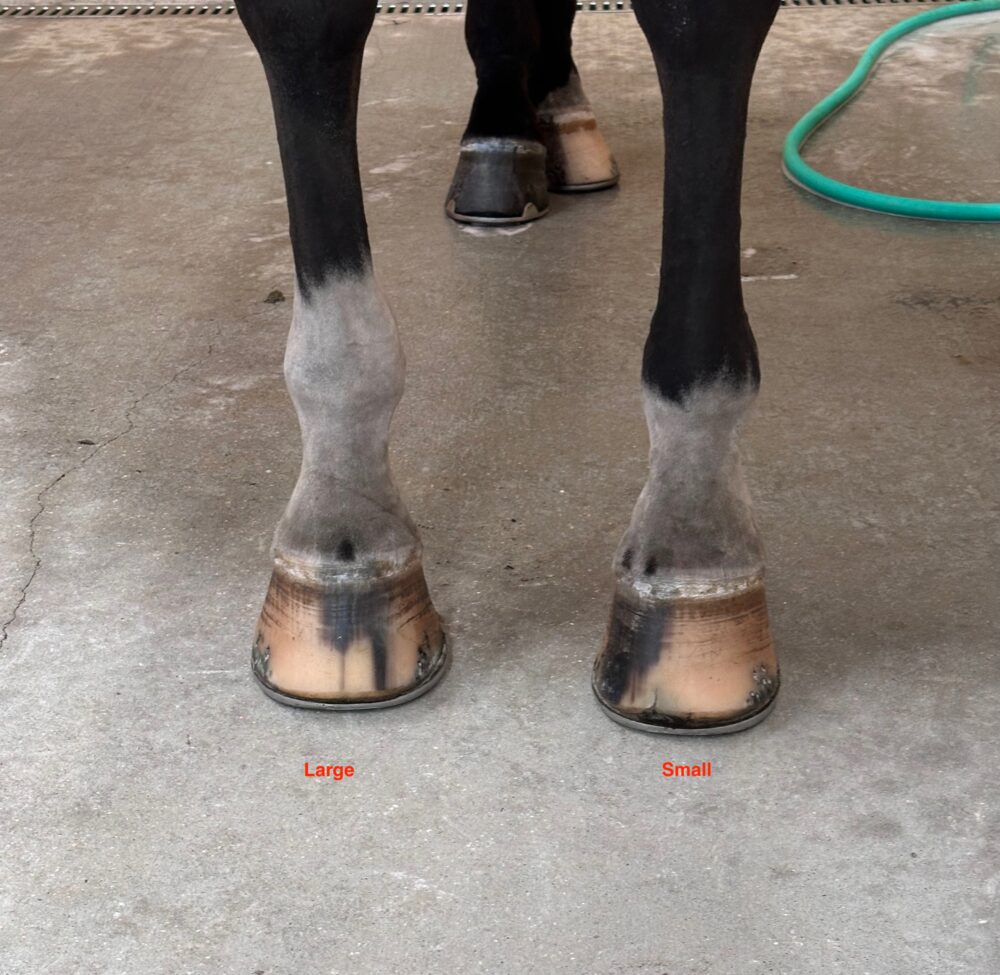
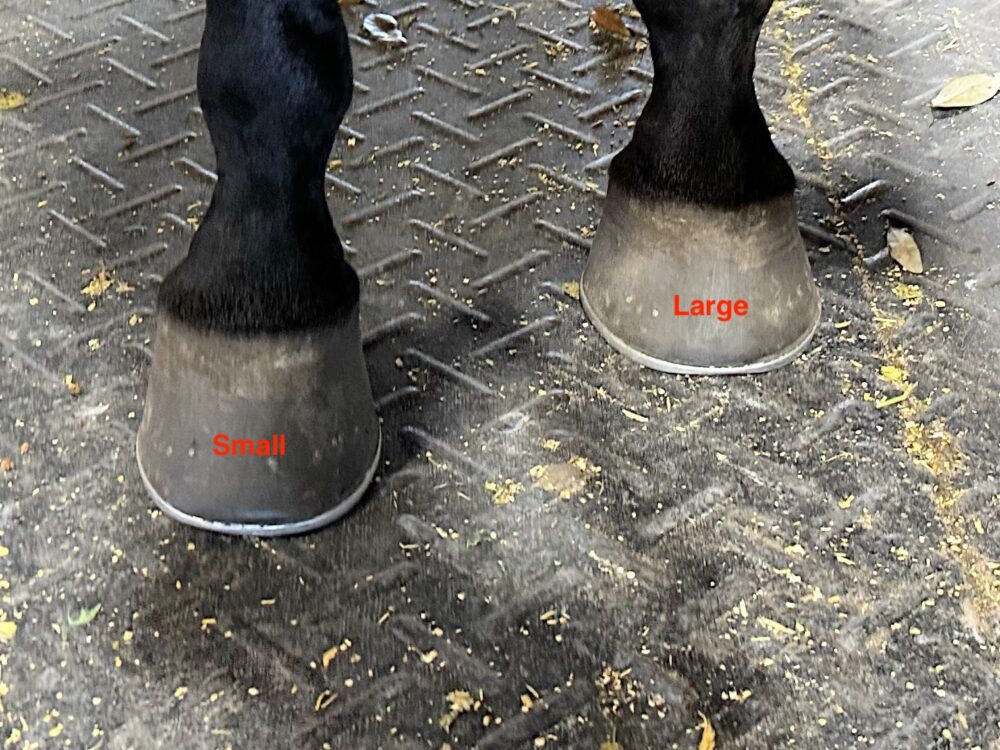
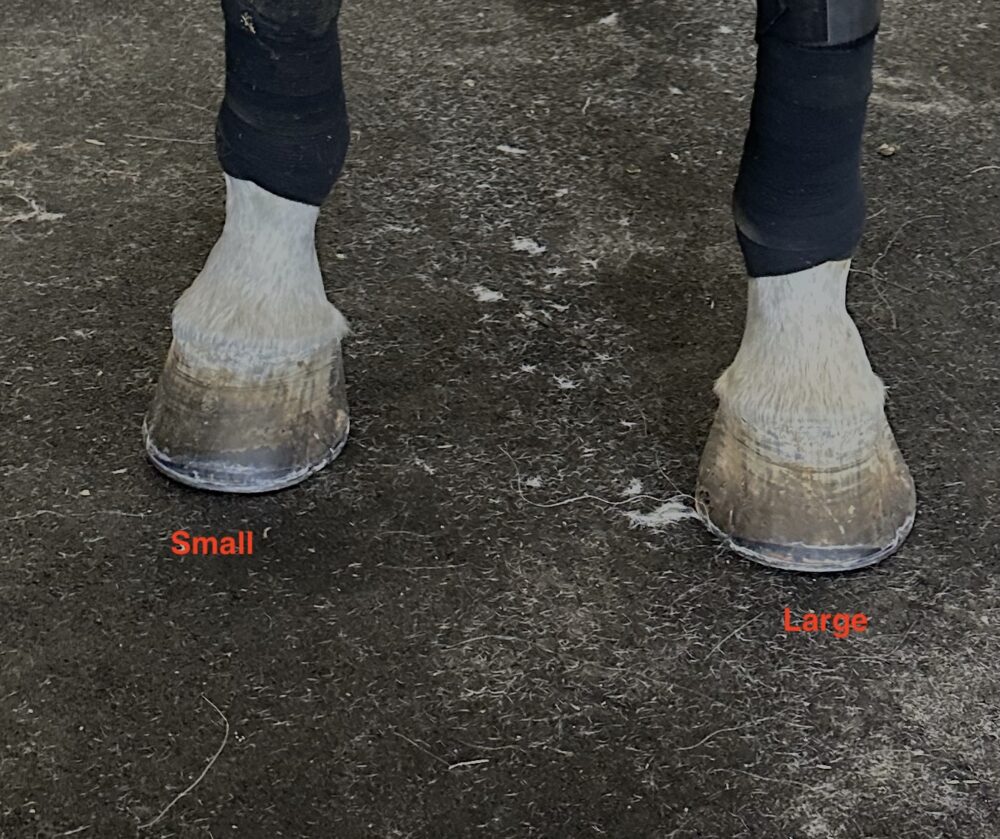
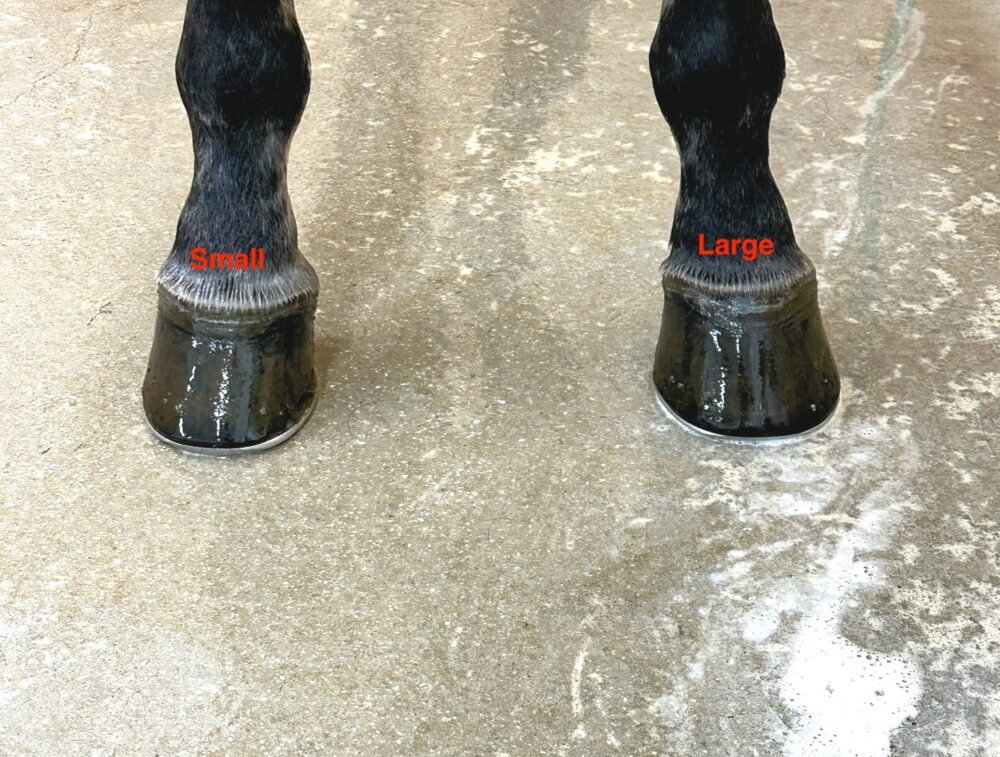
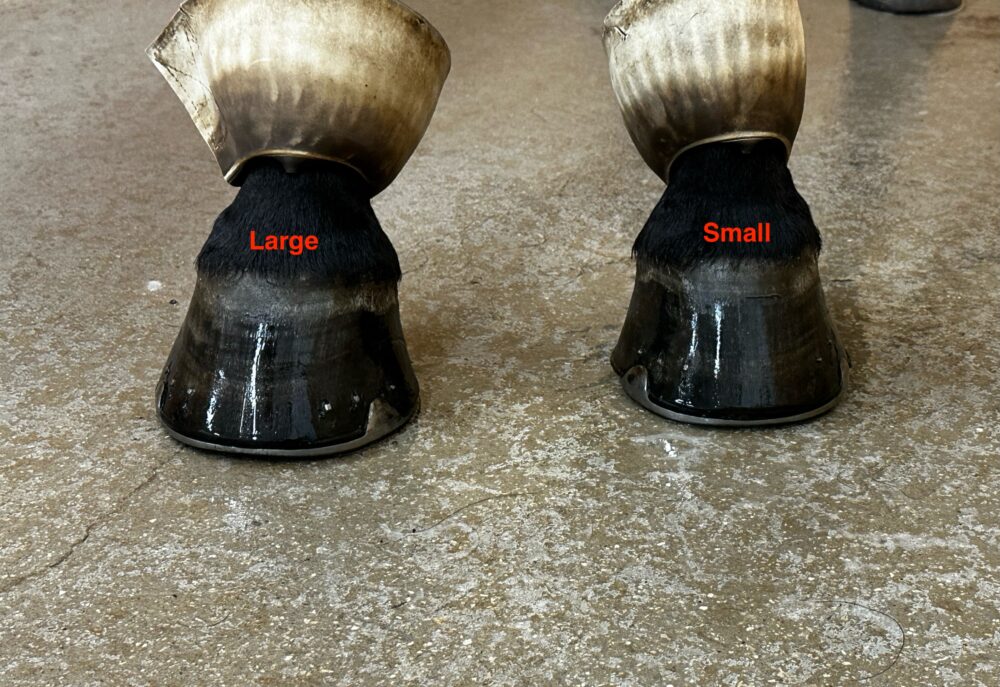
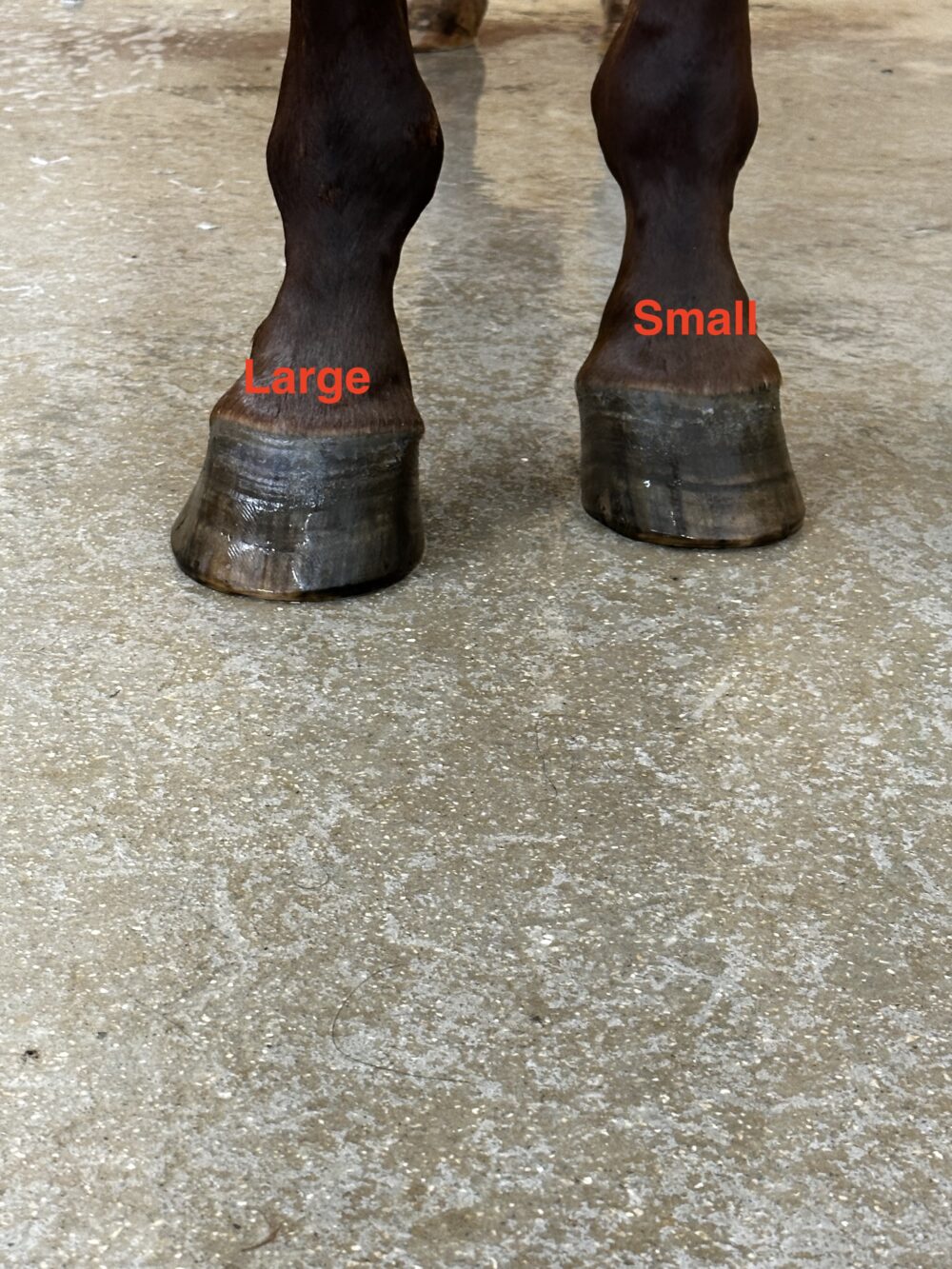
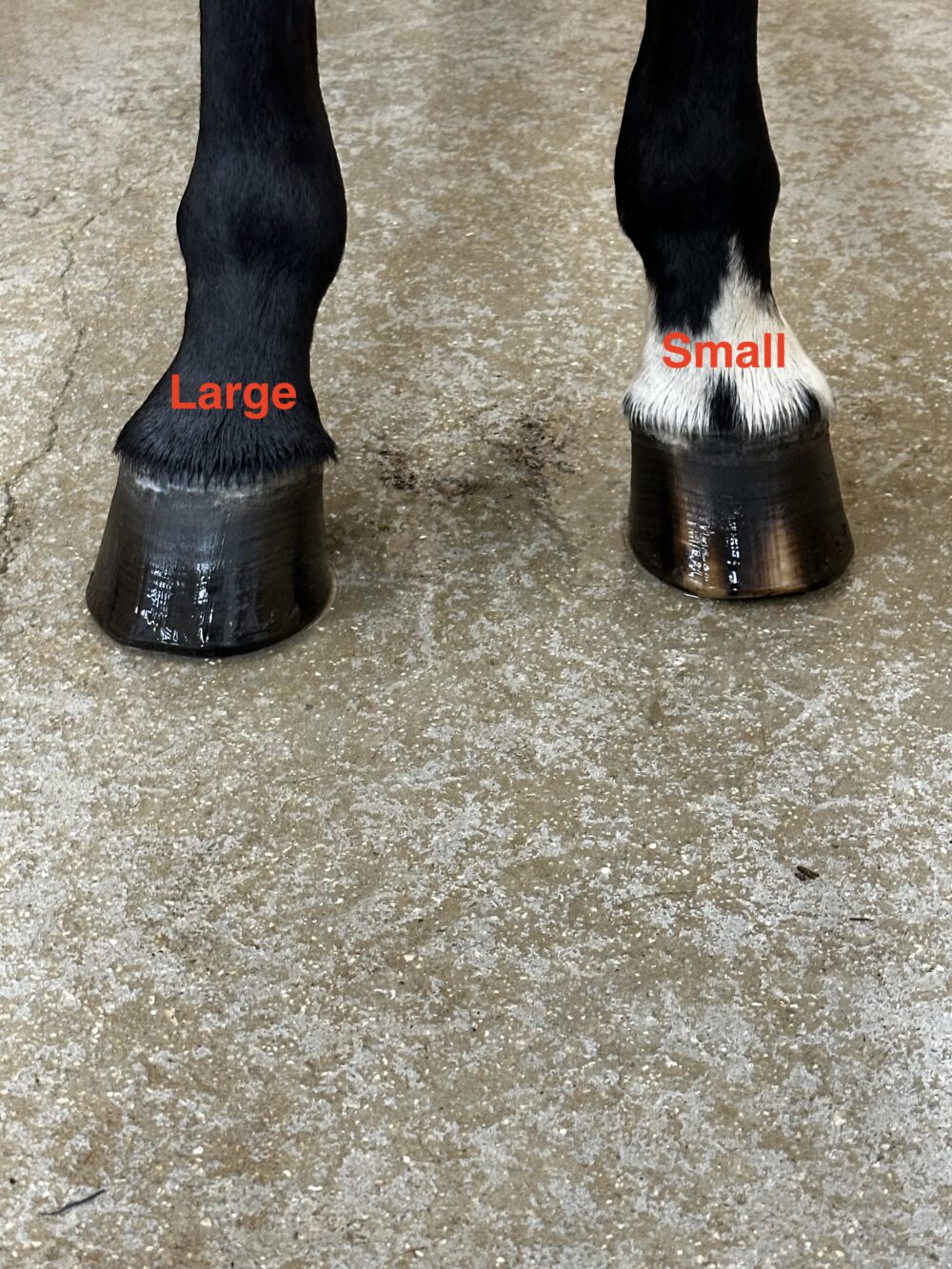
In all of these images the LARGER FOOT is the side that the horse will prefer. Is this a set in stone fact? NO, it is not a set in stone fact. However, approximately 90% of my patients follow this pattern. AND, most importantly, lameness occurs on the larger foot BEFORE the smaller develops lameness. WHY? Because it is loading/landing on that foot with more weight than the smaller foot!
But what does it mean “prefer”? It means that the larger foot is the direction that the horse will prefer to go more comfortably in his/her body. Go look at your horse, take a picture of his/her front feet and think about what side your horse feels more comfortable going. 90% is a pretty good average for fact which is WHY I can look at a horse and tell trainers/riders what side the horse prefers. This is NOT rocket science. It is simply observation and one year of history that will not lie to you about weight bearing no different than a house with a bad foundation.
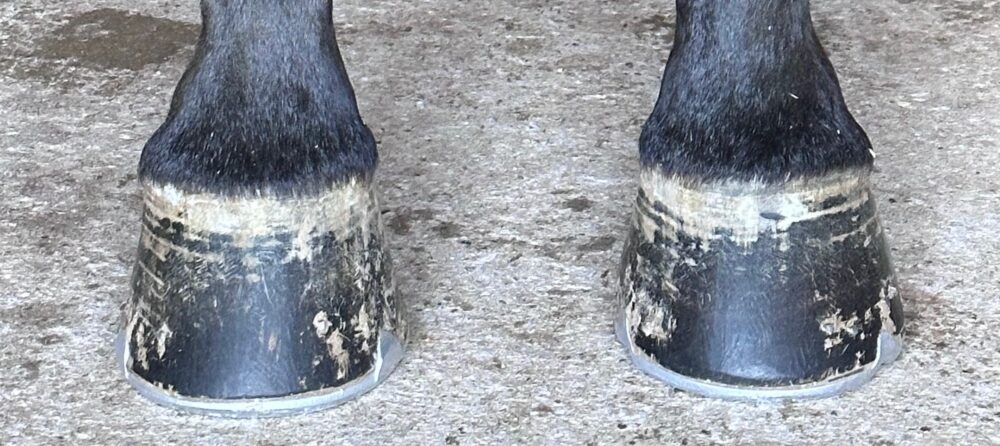
If your horses feet look even width and height wise, then you have a more balanced horse. However, it is 10% of the time that I see horses that are “symmetrical”. These are examples of more symmetrical feet, however even in these pictures there are differences in size, height, balance, and width. It was hard for me to find a picture of a horse with symmetrical feet with most of these images are of young horses.
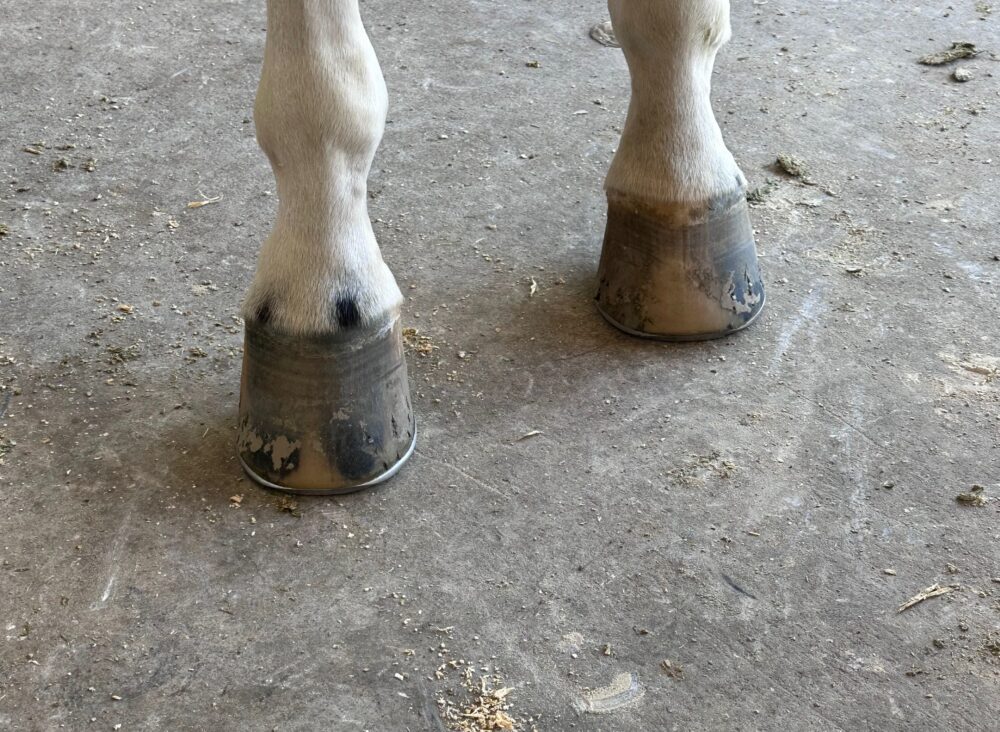
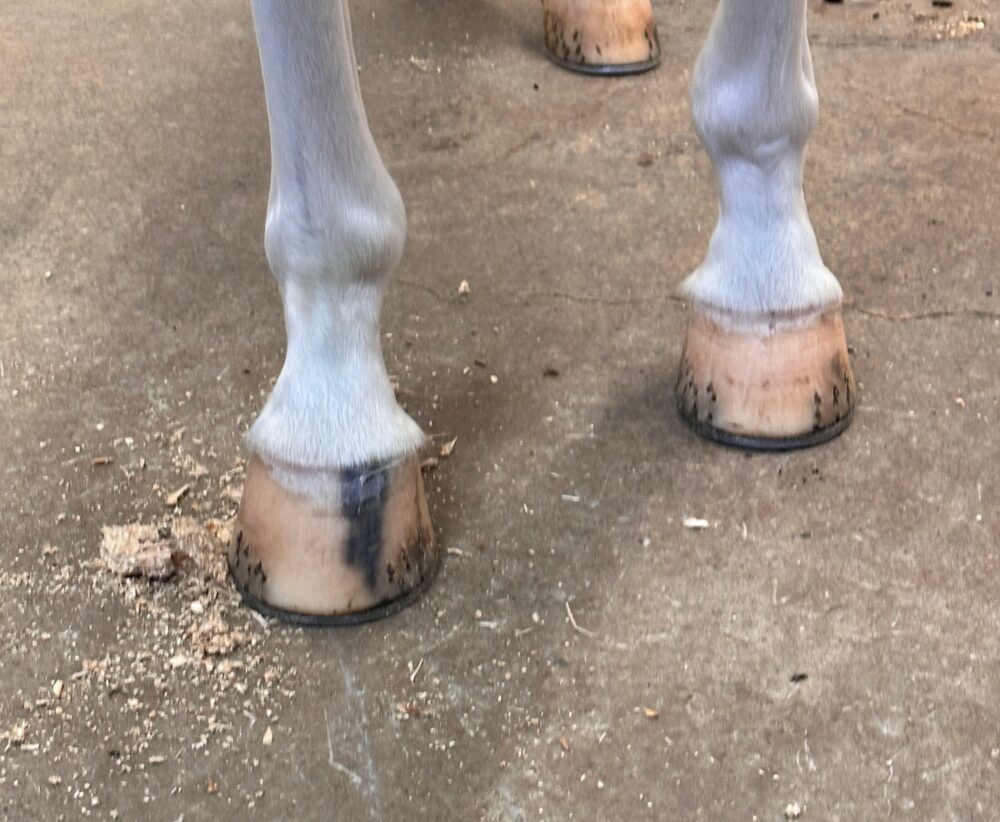
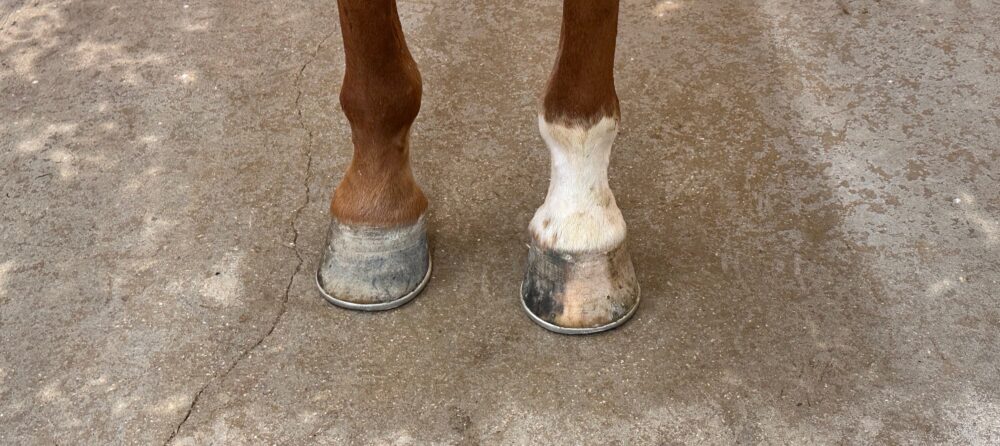
The upright foot is referred to sometimes as a “CLUB” foot when it is not a club foot and the wrong terminology. A true club foot is diagnosed with radiographs. An upright foot means that the horse is NOT BEARING WEIGHT on that limb and the foot grows like a column.
An upright foot is a problem that your farrier has to deal with and try to fix with shoeing instead of recognizing that this is a lameness issue in their BODY, i.e. body lameness!
How a horse WANTS to stand also determines where the horse is painful and affects how the foot grows. This horse has semi “symmetrical” front feet but always stands with the toe slightly turned out. I know they are not symmetrical but WHY is the foot turned out? The video will show why multiple veterinarians focused on the RF FOOT causing the lameness in this horse, whereas I could see CLEARLY that it was not a foot lameness case!
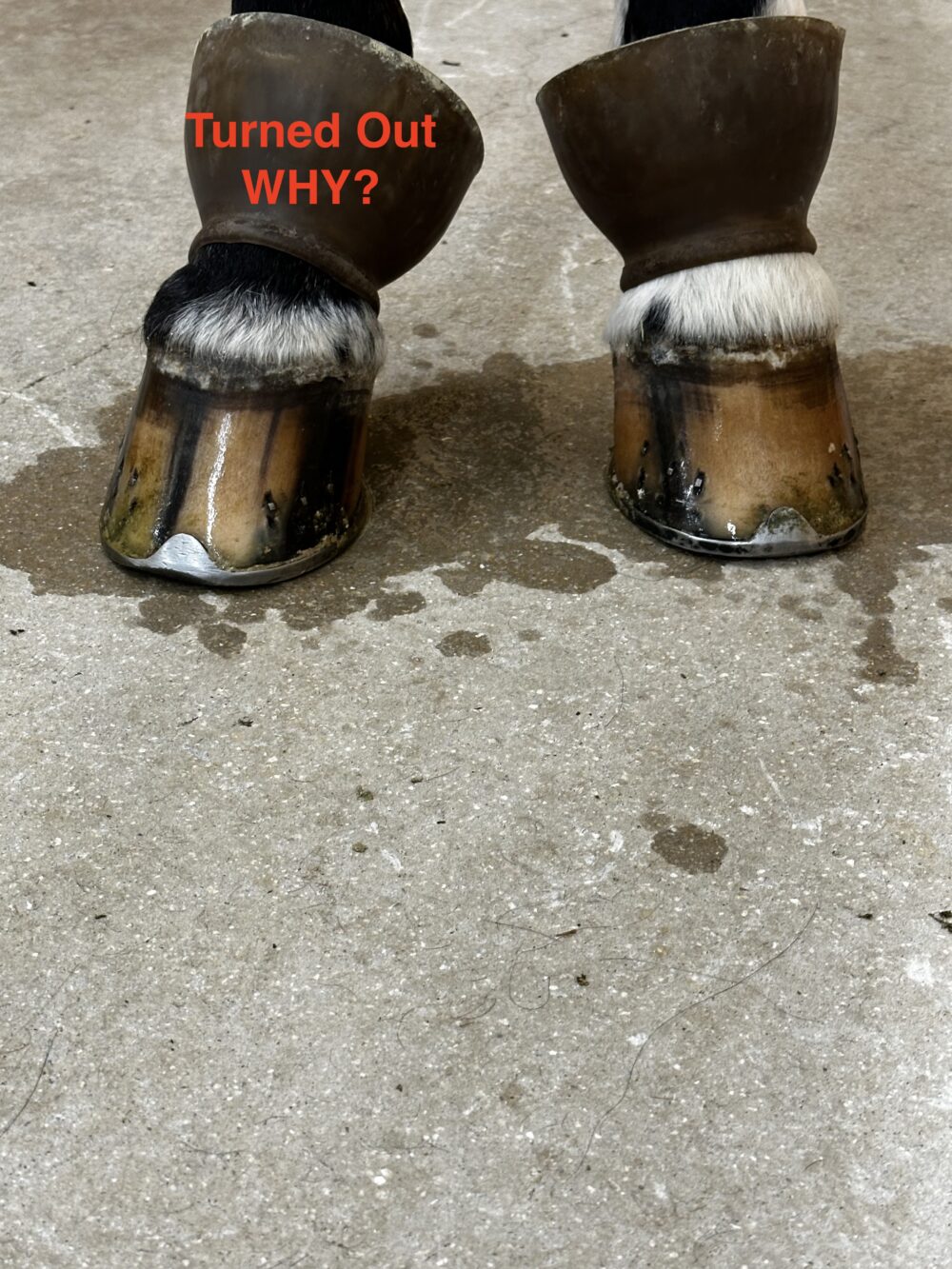
The same is true for the hind limbs (see image below) which is another topic I will cover in a future blog.
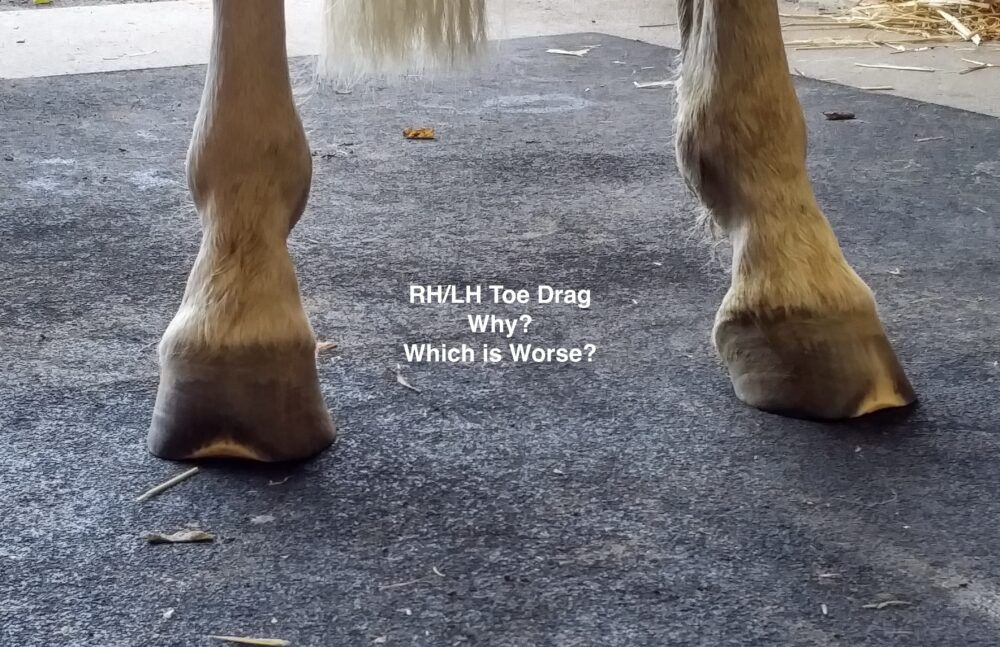
These are simple uncomplicated concepts and patterns that I have seen throughout my entire career as a veterinarian. Early in my career I did not understand the pattern of what I was observing or how to translate a horses foot/feet to biomechanics of weight bearing and movement. Now I have a better recognition of the pattern by listening to trainers, farriers and owners but most importantly the horse. Hope that this blog has helped you understand that horses with asymmetrical feet, is not normal.
Please share this blog and my podcast with your horse friends, and comment below if this was helpful. Most importantly, remember to always put The Horse First.
AJD
Yes!! As an equine osteopath I keep seing these all the time and sadly vet keeps treating the limb, i always follow the body cause thats what we do. Greetings from freezing Finland
1 Comment on What is Normal about Asymmetrical Feet in Horses?