
Barcelona, Spain and Awareness
Hello Everyone,
Barcelona, Spain. What a beautiful, wonderful place to see and experience. I loved teaching the equine veterinarians from Spain and other European countries during my first trip to Barcelona. All the veterinarians were extremely loving, open minded and curious! Their openness of mind and curiosity for learning made me feel like I was on another planet compared to the resistance, judgement and strong bias of what I experience here in the United States. It is amazing how ~4700 miles or ~7500 kilometers can make such a big difference in mindset due to a culture and caring. Here in the United States the scientific concepts that I am teaching are considered “Voodoo” or divergent thinking due to the closed minded and “gatekeeping” caste system that is present in the equine veterinary profession as ego, hierarchy, and fear prevent advancement of science. These scientific concepts have been around for centuries and written by others. My only contribution to these historical scientific concepts is that I am really good at simplifying the complex while connecting dots that people do not think have any connection or no known path of connection. My only contribution to the equine veterinary profession is pattern recognition.
I was invited by the AVEEC, Association of Veterinarians Equine Specialists of Catalunya, Spain to spend three days teaching. First day was teaching the slow and arduous process of “Awareness” and Equine Biomechanics. This included “awareness” training then how a horse biomechanically works, patterns of injury, compensation and clinical signs of riding patterns with causes that trainers/owners are dealing with daily. The second day was the iliopsoas. Injuries with clinical signs, causes, necropsy-anatomy, biomechanics, treatment, and rehabilitation protocols, including causes of shivers and stringhalt and treatment protocols. Yes, there is a treatment for shivers and stringhalt. No, it is not, nor have I even done cerebellar brain surgery. The “Wall” comments may explain this irrational and illogical accepted hypothesis by the equine veterinary profession for the cause of shivers and stringhalt clinical signs, but you need to read further. Moving on…The third day was “Girthiness” and Shoulder Girdle Injuries. Again, biomechanics, causes, clinical signs, necropsy-anatomy, and treatment-rehabilitation protocols. Tons of great questions, discussions, and more curiosity! Awesome time and wonderful caring people who are open-minded equine veterinarians!
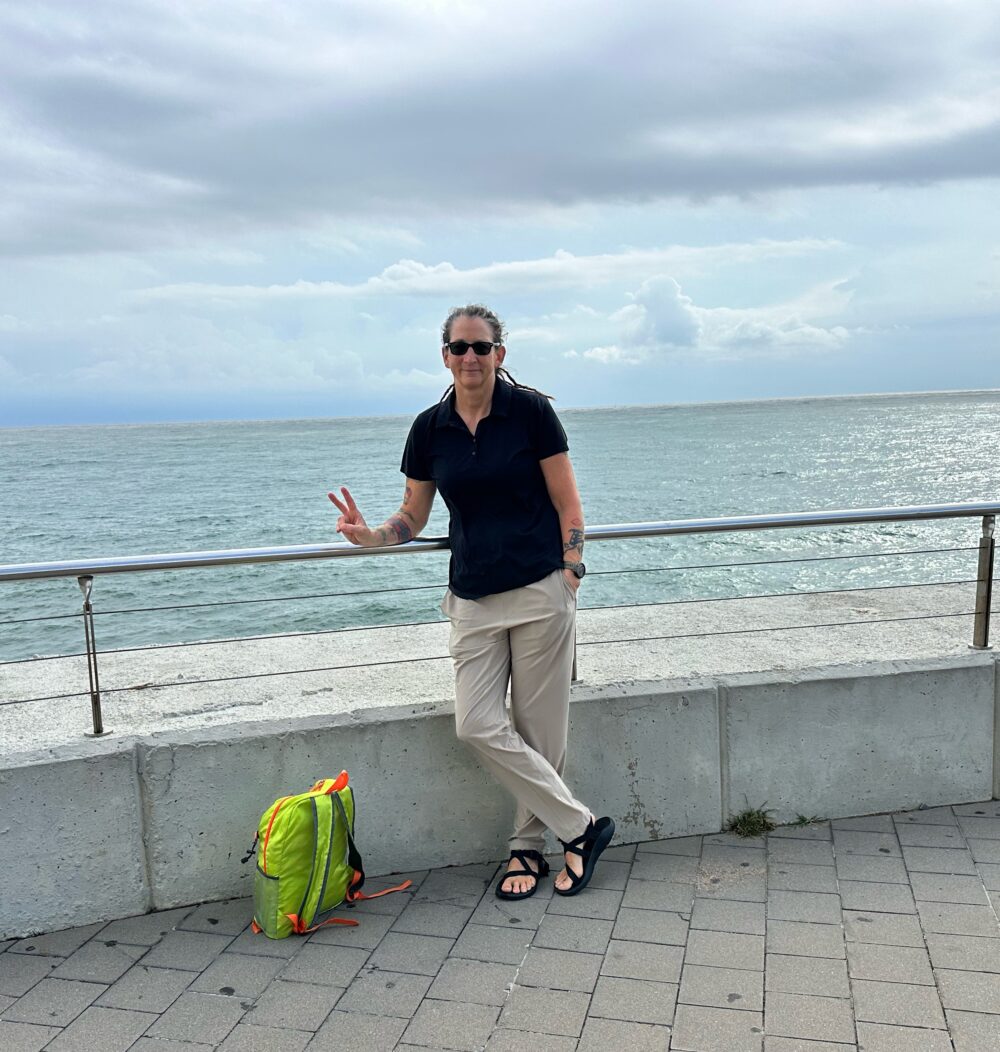 The first day teaching veterinarians is always the most interesting for me as I too am learning how to teach this profession as they, veterinarians, are my sociology experiment. No matter where I am teaching it is fun and I love meeting new people. I enjoy understanding and learning different dialects of languages while also learning the culture of those attending the lectures. Teaching horse trainers, equine bodyworkers-physiotherapists and owners is so simple as openness of mind to learn solutions to problems, explanations of how things work and why they work is priority over specific detailed answers and recipes. Teaching equine veterinarians, no matter where in the world, is a process of jackhammering a concrete wall down, loading the broken concrete rubble into a wheelbarrow piece by piece, then slowly wheeling away the rubble and dumping the wheelbarrow rubble into a pile right behind where the wall previously existed.
Thus, reconstructing another wall made up of jack-hammered pieces of concrete rubble. Why is the rubble wall reconstructed instead of no wall being present? Because for most equine veterinarians (not all) it is more secure for them to have a wall. Even a wall made up with broken pieces of concrete rubble that cannot be put back together to make sense. Just like the pieces of a jigsaw puzzle called lameness, equine veterinarians think that if they put the same puzzle together over and over again (flexing-blocking-radiographs-CT-MRI), they will have all the “pieces” that will solve the performance puzzle. That lameness puzzle that we have continued to pursue has never been solved because we have not seen the total picture, as we have been looking only at the “pieces” of the horse.
It is why “awareness” of the obvious is a foreign language called “horse.” Veterinarians do not know how to speak this foreign language called “horse,” nor can they read it thus see (observe) “the obvious.” The very simple and basic abnormalities have been ignored, denied, overlooked, disregarded, benignly neglected, or have been dismissed as normal by a profession that is responsible for being the “professional”? To state it simply: The abnormal has become the norm for normal in sport horses.
It is hard teaching the process of “awareness” to humans, much less highly intelligent equine veterinarians. Awareness to the obvious in our patients, the horse, is a concept that is foreign to 99.9% of the veterinarians I have met. Yes, 99.9%. IF even 50% of the equine veterinarians in the world were “aware,” I would not be teaching throughout the world or have a podcast (The Horse First) that has been ranked in the top 10 of all equine/horse podcasts yearly since its establishment in September 2018. How do I know this as fact? Because I would have been taught this obvious information in veterinary school and learned it from other established equine veterinarians. It would have already been established as “the obvious” assessment of a patient, the horse, including being written in textbooks and peer-reviewed literature. It is not; thus, my own sociology experiment is observing and learning how to teach “awareness” and the “obvious” to equine veterinarians. What a difficult but fun experiment it has been.
The learning process of “awareness” is hard for people to accept until they do. They want to immediately hurry up and jump to the ending i.e. THE TREATMENT! They want to know the beginning and ending like reading the first and last chapter of a book instead of patiently reading and enjoying the unraveling of the story. They want to memorize a list of irrelevant facts or follow a recipe without understanding how the process works. Or in cooking the knowledge, patience of time, and the development of taste in a finished dish that is dependent on textures, balance of ingredients, and most importantly, pH. Just follow the recipe and you too can “Beat Bobby Flay”! Wish it all were that simple.
Becoming “aware” and “self-aware” is very uncomfortable for most people, including veterinarians. One must come to terms with the facts of their own deficits, i.e. self-reflection. It is easier to scroll through Reels on Facebook than take the time to self-reflect. Those deficits of “unawareness” of one’s patients, i.e. horses, in the equine veterinary profession is not their fault. They were taught by an institutionalized “unaware” cultural methodology that normalized the abnormal. It is a standard that is subpar to even average for sport horses much less horses not used for sport. It is “unawareness” that has led the equine veterinary profession to where we are today with no answers for the trainers and owners even with advanced diagnostics such as MRI’s, CTs, and AI. It is easier to state: “that’s just the way the horse is or goes”, “cannot find anything…it’s a chestnut mare,” “It’s hot,” “Work it harder it’s a training issue”, or my favorite: “it’s behavioral.”
Equine veterinarians, me included, have created these problems. These problems, “unawareness” to the obvious problems in our patients and “quick fix” recipes has led us further and further away from the simplicity of actually taking the time to observe our patients, but most importantly to CARE for our patients. The fear and resistance of change to become “aware”, requires not only critical thinking and curiosity for learning, but the acceptance that we also need to grow as human beings individually. To be kind not only to ourselves, but to others and to our peers.
A few days ago, I rechecked a patient that I started seeing in May of this year. The horse, seven years old, HAD severe carpal wobble that was worse after exercise and poor body condition (3/9) with concerns by the representative (owner/trainer) of the horse being “unstable” to ride. Sweet, sweet kind horse with a dull, painful eye when we first met. The representative was desperate for help and had seen multiple lameness veterinarians. After multiple lower limb (hocks, stifles, then carpus), “SI” injections and ulcer treatment, there was no improvement whatsoever in the horse’s ability to gain weight or front-hind limb lameness. Farrier recommendations were followed, again with no improvement of carpal wobble, as the horse’s feet were still falling apart as the growth pattern stayed the same. The obvious is true for farrier work; weight bearing dictates everything, no different than the foundation of a house. The representative was frustrated with the fact that the carpal wobble had not improved nor was acknowledged or even noticed by any of the veterinarians initially, as it was the representative’s primary complaint along with the inability of the horse to gain weight. It was obvious! So very, very obvious that carpal wobble is abnormal but accepted as normal. Prior shoeing did not fix it. Prior injections did not fix it. It became the representative’s problem as the veterinarians “deliberate avoidance” (i.e. turned their backs) to finding a solution was benign neglect to the horse who ultimately suffers.
What improved the clinical signs of carpal wobble AND the ability of the horse to gain weight? Recognition of PAIN and the understanding of HOW A HORSE WORKS! How a horse works is biomechanics! What is functional and dysfunctional. What are the patterns of dysfunction and compensation? It is having “awareness” of your patient. It is “awareness” of the obvious! It is having curiosity! It is not just following a “recipe” that has not worked over and over and over again. It is critical thinking. It is doing research to search and re-search for your patients. It is wanting to know why the horse has carpal wobble. It is about wanting to know why the horse is not gaining weight even after months of ulcer treatment and thousands of dollars down the toilet…literally! It is wanting to know why the horses feet continue to grow in the same pattern! No decision, treatment or change made helped this horse! It is easier just to point fingers at everyone else without having to self-reflect. It is easier to blame. It is easier to blame the horse. The horse who has no voice or say in anything that happens to it. It is about caring. It is about wanting to be better! It is about being open minded and “Aware”. It is about taking the time to actually SEE the horse. None of us in the horse industry would be doing what we do if it were not for the horses! They, the horse, is the one common denominator that all of us should be “AWARE” of daily. We should not take them for granted, for they are our livelihood, leisure, or love. In my case they are all three but also a fourth, my teachers. It is their knowledge I have learned from them, not my knowledge, I continue to share with you for their betterment.
As I walked around Barcelona enjoying the food, culture and history I realized that every tourist and person walking by centuries old statues of horses did not see what I saw. They too were not “Aware” of the obvious present in every horse statue I saw… PAIN!
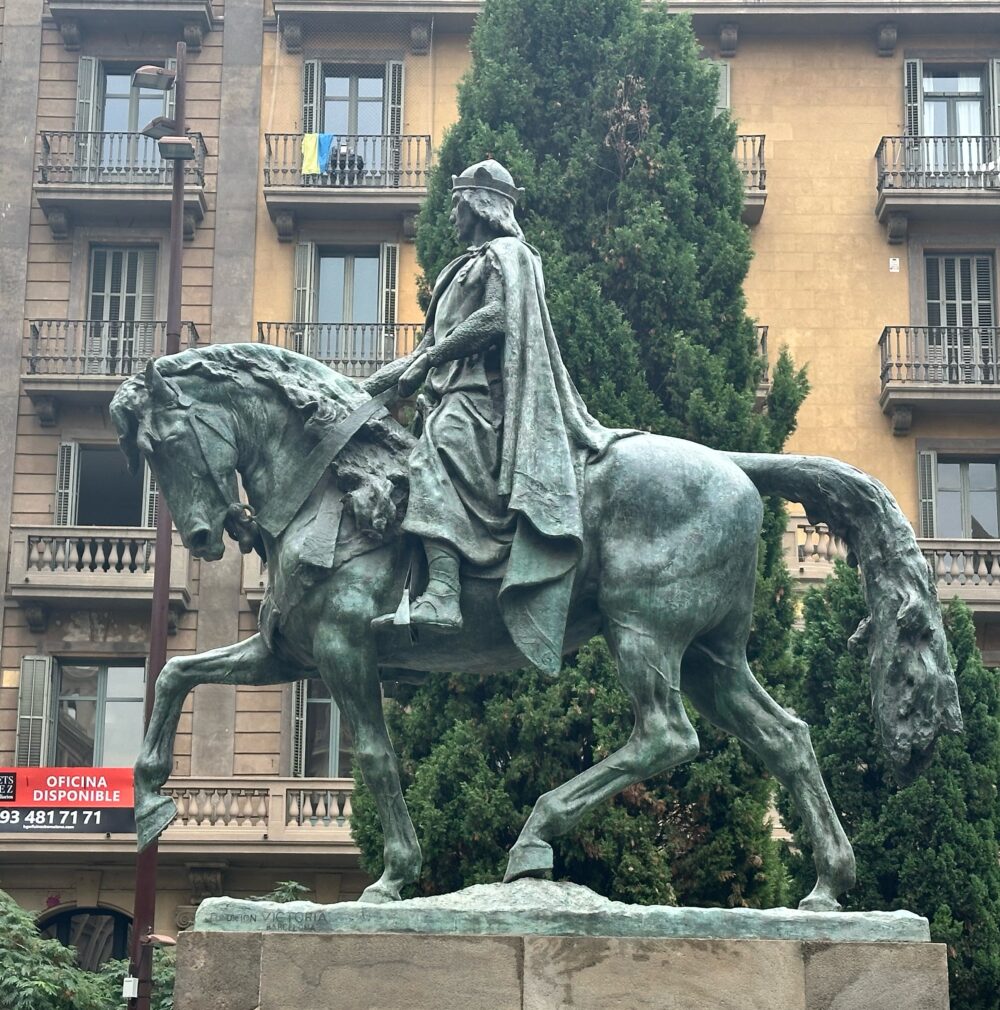
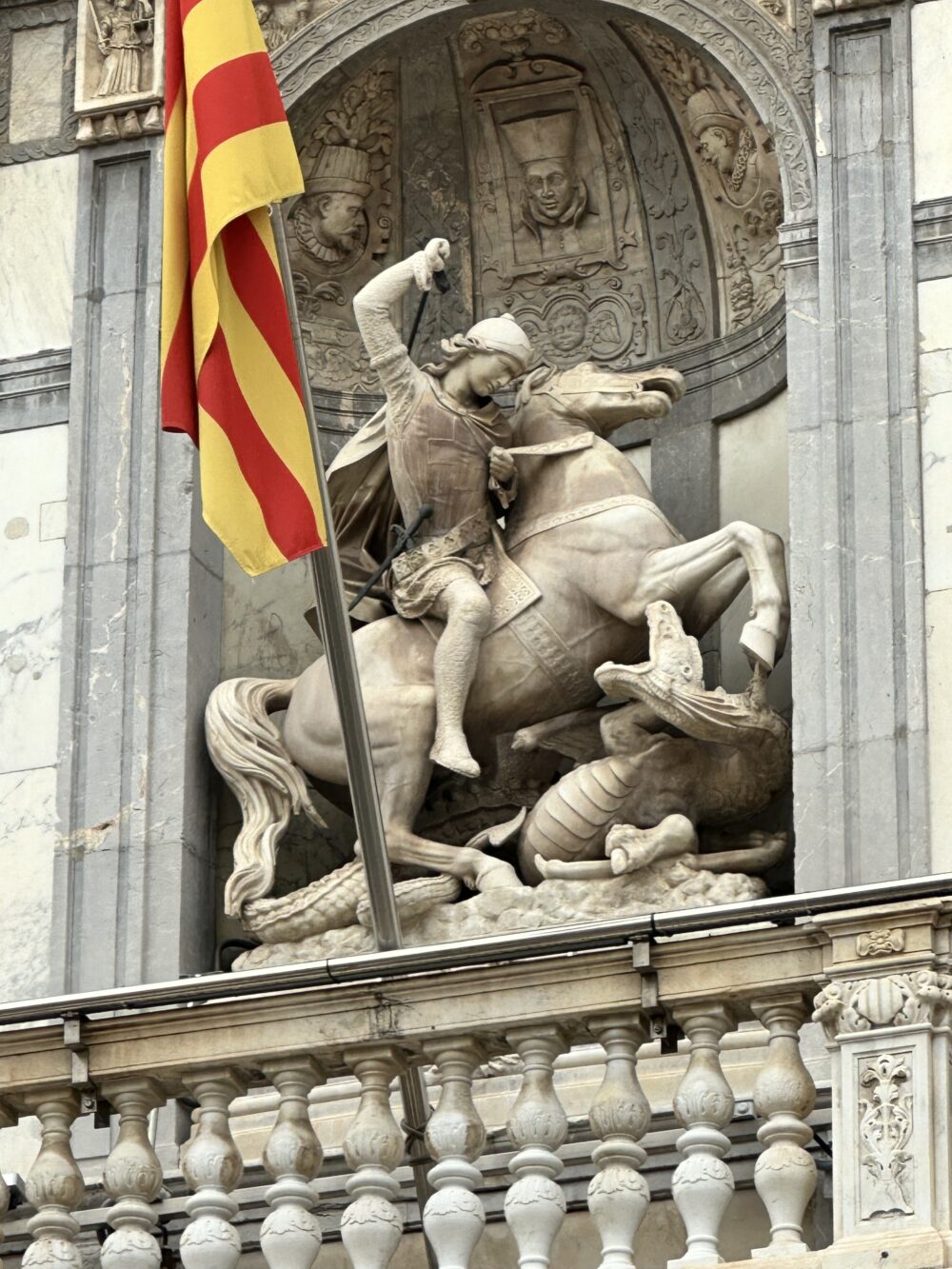
When are we going to become better for the horse?
When are you going to decide to become “aware”?
Coming soon…The Horse First Magazine! Online and assessable no matter where in the world you may be!
Be the Voice.
Be the Advocate.
Always Put… The Horse First!
AJD
Be the first to comment