
Iliopsoas: The Most Important Muscle, Besides the Heart!
Hello Everyone,
Sorry for the delay in blog posts but there has been an overhaul to my website along with other technical issues being worked out to get this process working once again thanks to my web design person, Maggie Carty, and her team.
Let’s jump into an unknown abyss of education and talk about the ILIOPSOAS muscle. As the second most important muscle, moving the second most mobile joint region in all horses, it is interesting and perplexing to me how the equine sports medicine profession has largely ignored that a horse has this muscle or simply has not understood its extreme significance to poor performance and resistance to work in sport horses.
Why is it so significant, and what does it do? It is significant due to the fact that it is the PRIMARY muscle responsible for the “ENGINE” of the horse to work and function properly, including stabilization of the thoracolumbar (thoracic-lumbar) spine. It is as important as gasoline or diesel fuel is to any combustion engine (car, tractor, airplane, or boat). Without fuel, or the iliopsoas, the “ENGINE” cannot, nor will it, function properly to go anywhere! IF it is injured, the “ENGINE” will not function properly and will start misfiring and stalling out just like your car.
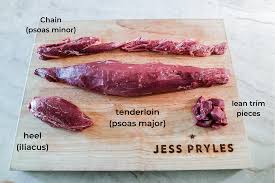
Where is the “engine” of the horse? It is not like your car engine that is “under a hood” where you can pull a lever and it unlocks the “hood” to give you access; however, it is literally under the horse’s spine. I must state that it is the PRIMARY muscle under the spine and extremely important for you to remember for the next blog! It extends from the last portion of the thoracic spine (T15-ish) to the last of the lumbar vertebrae (L6), where it attaches to the pelvis (ilium). For people who love the “filet mignon” at your favorite steakhouse, also called the “tenderloin,” this is the iliopsoas that you are eating, as it located in the “loin” of every animal and is “tender.”
Enough of what you are eating…. How does it move the “ENGINE”? As the iliopsoas contracts and relaxes it moves the “ENGINE” where the lumbar spine attaches to the pelvis (ilium). The movement of the following joints engages and flexes the “ENGINE” are the lumbosacral and lumbosacral-intertransverse joints (LS-ITJ) at L6-S1 being of utmost importance as this entire region moves ONLY as a UNIT! This means it cannot work independently from right or left sides. Also moving the “ENGINE” to create flexion and engagement of the hindquarters are intertransverse joints (ITJ) at L5-L6 (some horses L4-L5) and coxofemoral (hip) joints.
There are many descriptions used in the horse industry dependent on the article, magazine, book and discipline: “sit”, “engagement of hind end”, “be in collection”, “have hind end collection”, “haunches under”, “under him/herself”, “sitting on its hind end”, “turn on its haunches”, “lowering its croup”, “sitting on its haunches”, “hind end under its body” etc.
A quick explanation of the anatomy and iliopsoas is in the video below:
People in the sport horse industry will disregard not only the significance of the Iliopsoas muscle, some will criticize and/or nullify the treatment for whatever reasons they may have personally. However, it is through education based on logic and facts of equine anatomy and how it functions that will give the sport horse industry a better understanding of WHY it is the second most important muscle in EVERY sport horse.
Join me for the ride in my next blog which will be a deeper dive into the function and dysfunction of the Iliopsoas muscle so that you can recognize the clinical signs of iliopsoas injuries.
Please share this blog and my podcast with your horse friends and comment below if this was helpful.
Most importantly, remember to ALWAYS put The Horse First.
AJD
Be the first to comment